

In a groundbreaking development the location-based analysis services of Atterbury’s technology partner Fatti is now being used at sea. This is a whole different ball game, says manager Adrian Maguire …
How did Fatti get to find itself at sea? Who even thought of this for a ship?
Fatti has been very privileged to deploy its first Wi-Fi real-time location-services software on the Discovery 1 ocean liner through our international partner, Airloc8. The ship owners actually came to us through Airloc8, because they were hoping technology could help them understand and anticipate passenger behaviour so that they can maximize the commercial opportunities on board.
In practical terms what was the client hoping to find out?
A ship is like a city that never sleeps, with the environment changing constantly over a 24-hour period depending on whether they are at sea, docked in a port or loading new passengers. What the clients wanted is information on passenger behaviour, for the benefit of different divisions on the ship.
And how does Fatti help to answer those questions?
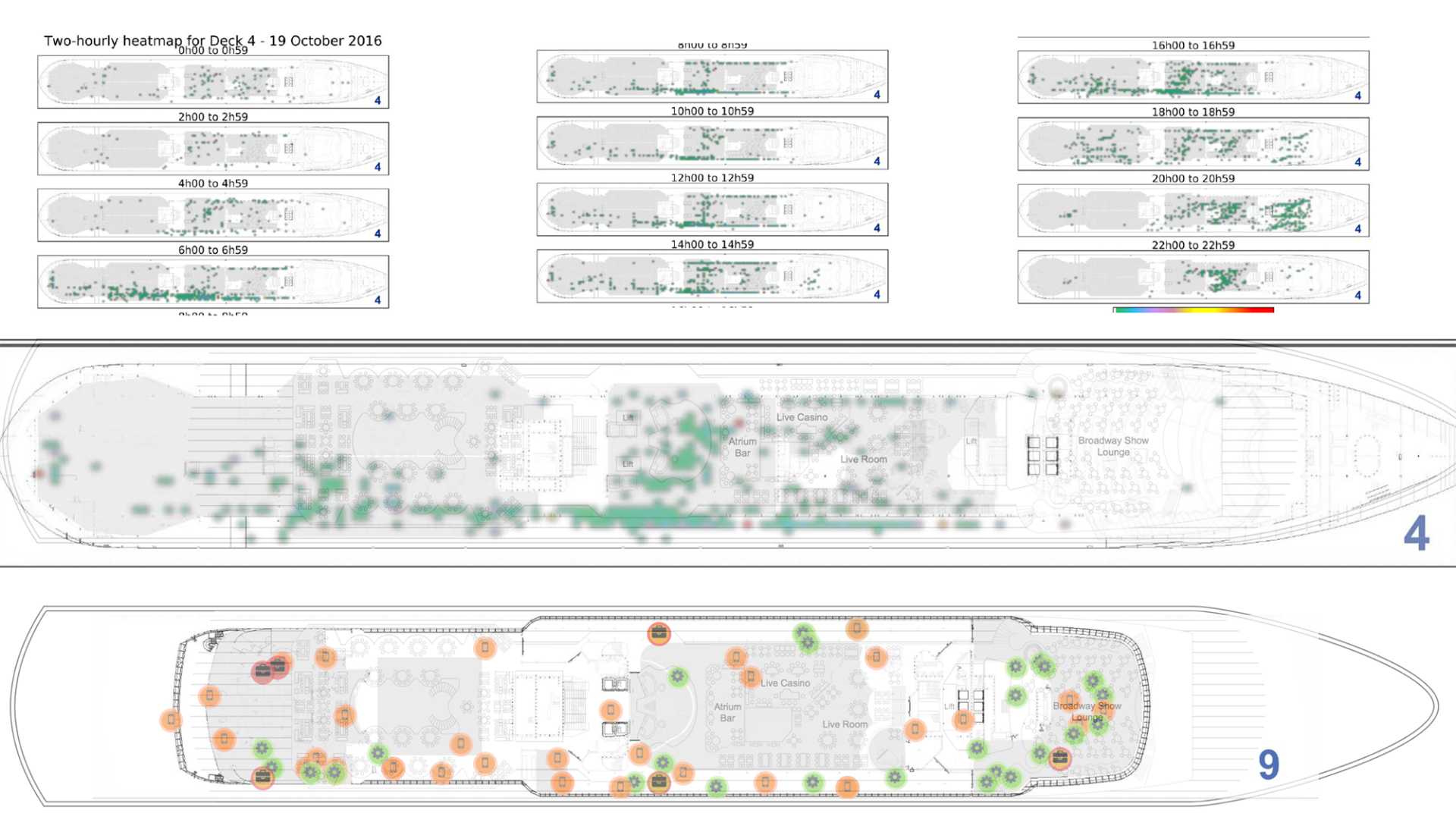
Our analysis helps different divisions in different ways: marketing needs to understand people are at the bars, casinos and entertainment areas, when and where did they come from to be able to assess revenue opportunities and event planning . Operations and housekeeping need to understand deck density and movement of passengers to do efficient planning of, for instance, the cleaning schedule. We can help with detailed information.
Give us an example?
The cleaning staff are under pressure to clean the cabins efficiently in certain time slots. The passengers in different classes on the ship, have very different behavioural patterns, which Fatti’s technology can now quantify. For instance, the passengers in the fancier cabins with balconies, on deck 6, tend to have higher disposable income and they stay up later, spending time late at night in the casinos; and they also go on excursions off the boat in the mornings. So their cabins are empty later in the evening, and earlier in the morning. The passengers in the less pricey cabins on the other hand, on deck 2, tend to go to bed earlier after the free entertainment is over, instead of heading to the casinos late; and they tend not go on excursions but rather sleep in, which means their cabins are only accessible to housekeeping earlier in the evening and later in the morning. Fatti’s technology now confirms and quantifies this. This info is useful for housekeeping when planning when to clean where.
How does a ship like this one compare with a mall?
It is very different. A shopping centre has shopping hours that work in cycles where there is a lot of activity and then none at all. There is time to reset, and to install, and to prepare for a new day. On the ship everything is variable – there are people up and moving around 24/7 and our mandate was to understand this movement all the time – between restaurants, bars, casinos, entertainment areas, atriums. We had to install the system while at sea and it was a real eye opener. The fact that it’s a moving vessel is very significant, because various factors influence passenger behaviour – which way the boat is facing (in other words on which side the sun is), which port they are docking at – if it’s a popular one or not so much; the weather conditions (wind or rain mean that people won’t be at the pool, or on the windy side, but may congregate at the inside venues). The owners obviously also know their business and have a gut feel about many of these things, but for the first time they have measurable and fact-based stats, that can be compared cruse for cruse
The size comparison is also interesting…
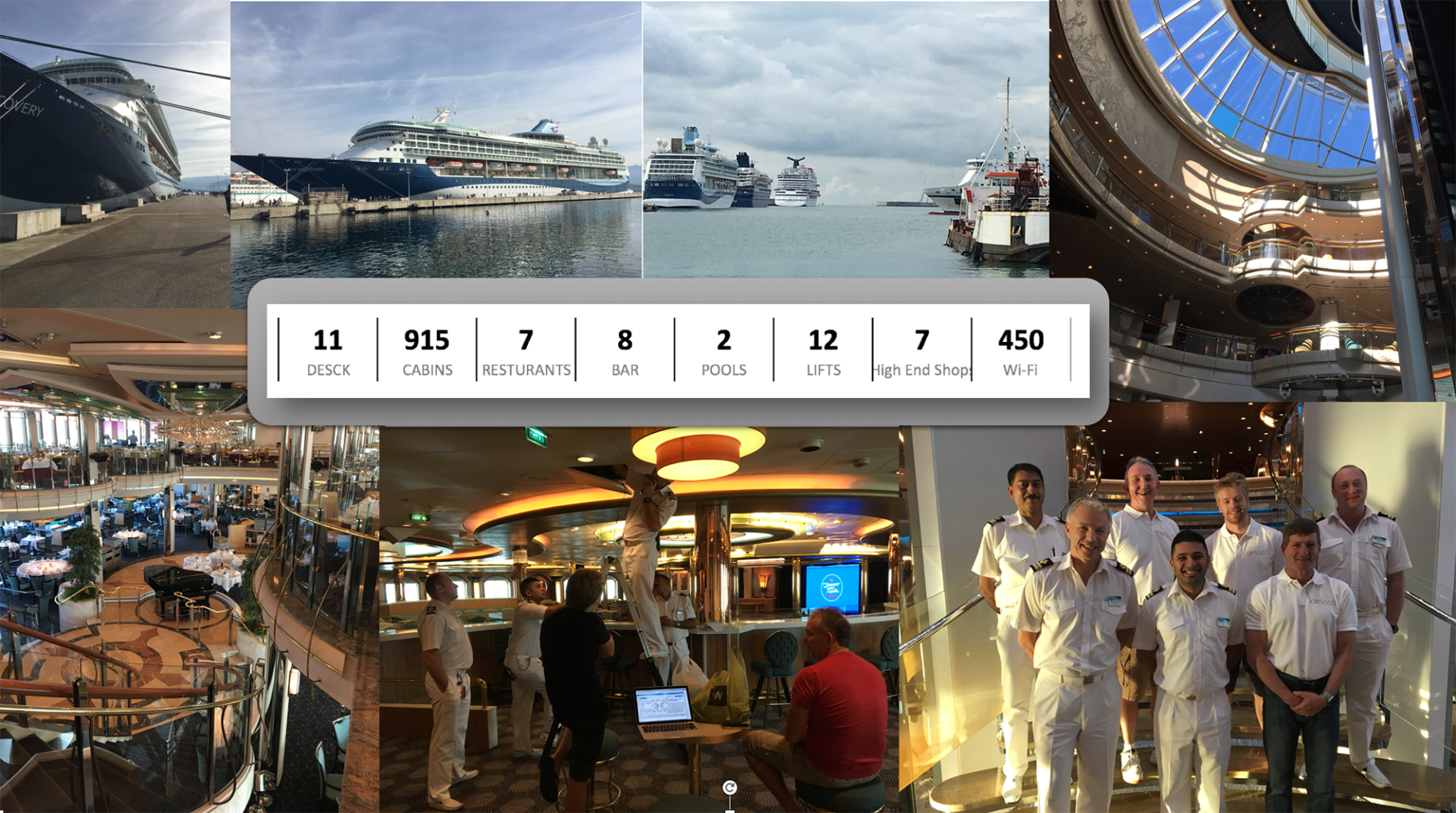
Yes. A typical mall is around 50 000 to 70 000 sqm, whereas Discovery 1 is about 120 000 sqm – even though a lot of that is not used by passengers (from the engine rooms and desalination plants and all the auxiliary services). The ship has 11 decks, 915 cabins, seven restaurants, eight bars, two pools, 12 lifts, seven high-end shops and 450 Wi-Fi access points. In comparison, Mall of Africa has only 350 Wi-Fi APs. The ship has massive diversity that never sleeps, and you get completely new passengers every seven days, which changes the whole picture…
What, in your mind, is the biggest benefit of having the technology on a ship.
There were a lot of other value propositions that just happened – such as when we traced a lost iPad on the first day! Since then we’ve been tracking and monitoring all the movable IT equipment staff members and other assets. But in a nutshell, what we give the client is a way to build up a history of behavioural patterns that will allow them more effective use of assets and staffing. Eventually they will get into a phase where they can predict behaviour accurately and plan their strategies accordingly.