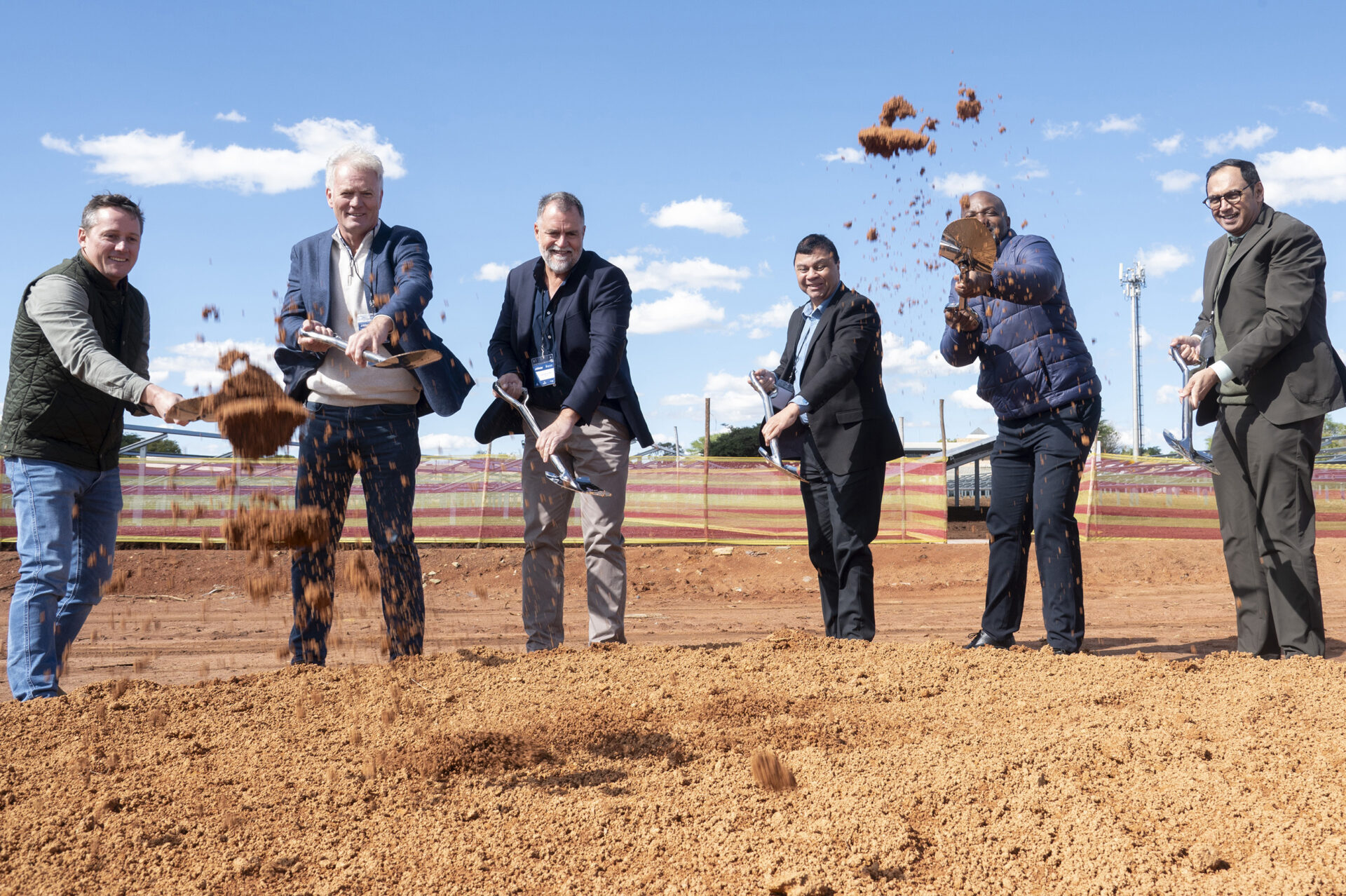


Don’t Waste is proud to be associated with Atterbury! DW’s association with Atterbury has grown over the years and includes “following” Atterbury into Namibia and Mauritius…
Don’t Waste started as a South African company, and now provides services and its world class (home grown in SA) waste management system internationally to 6 countries globally, including the UK. Rather than being a waste transporter, Don’t Waste provides on-site waste management services and world class systems for clients across different sectors, industries and countries.
What really makes it easy for us to partner with Atterbury is the fact that they believe in doing things in the best possible way. Our core product provides a comprehensive best practise model for managing on-site waste operations and ticks a number of essential boxes for the achievement of corporate ESG goals, environmental/legal compliance management and across portfolio reporting.
Social responsibility
Don’t waste was honoured to assist Atterbury at the Adopt-a-River School Poster Competition. The Atterbury Trust, in association with the Adopt Moreletaspruit Forum, was the proud sponsor of the Adopt-a-River School Poster Competition. The competition aimed at raising awareness of the importance of rivers to communities and the environment while also teaching children about the ecosystem in and around rivers in an exciting and entertaining way.
To assist in education, Don’t Waste produced and showcased at the prize giving event, a thought provoking movie “The waste concern” which shows the impact of waste and litter on rivers, water, land, ecosystems, people, air, climate and what needs to be done to address the issue. Jean Willard, a CRM from Don’t Waste presented the movie and then took the children on a tour of waste sorting and recycling operations at the facility.
Mall of Africa feature
As is typical with Atterbury projects, we were called in to consult and plan right at the beginning – at design stage. We were asked to plan on-site waste facilities required to ensure the implementation of a best practise model. Wow, what a pleasure – if only more clients would do this!
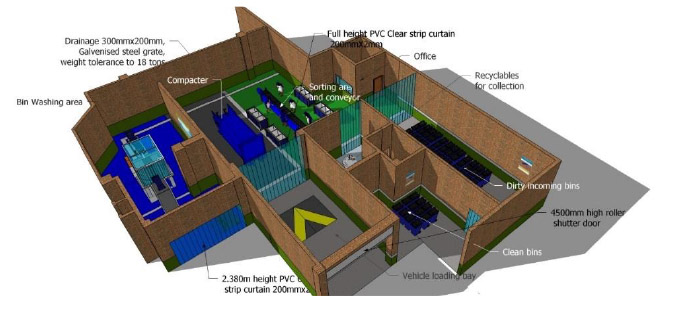
Net results for MOA for the period commencing April to June 2016.
Site waste management operations commenced and for the period above, a total of 178.6 Tons of recyclable material was extracted from the waste stream and diverted from landfill!
Grades extracted for recycling in tons
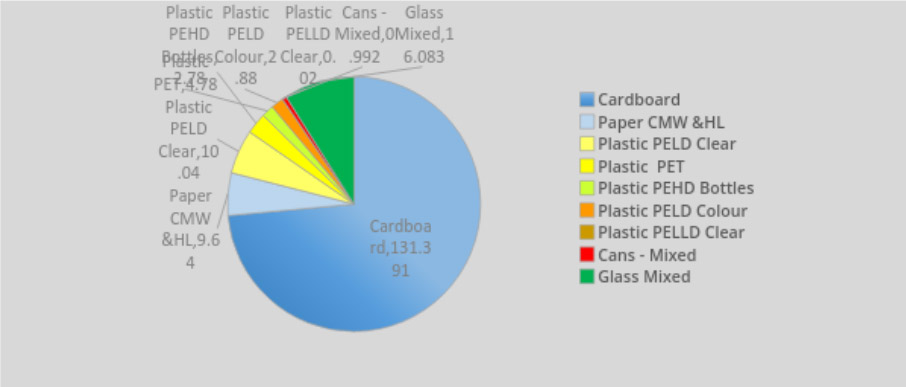
| Grids view of recyclables extracted for the period | Tons |
| Cardboard | 131.39 |
| Paper CMW &HL1 | 9.64 |
| Plastic PELD Clear | 10.04 |
| Plastic PET | 4.78 |
| Plastic PEHD Bottles | 2.78 |
| Plastic PELD Colour | 2.88 |
| Plastic PELLD Clear | 0.02 |
| Cans – Mixed | 0.992 |
| Glass Mixed | 16.083 |
| Total | 178.61 |
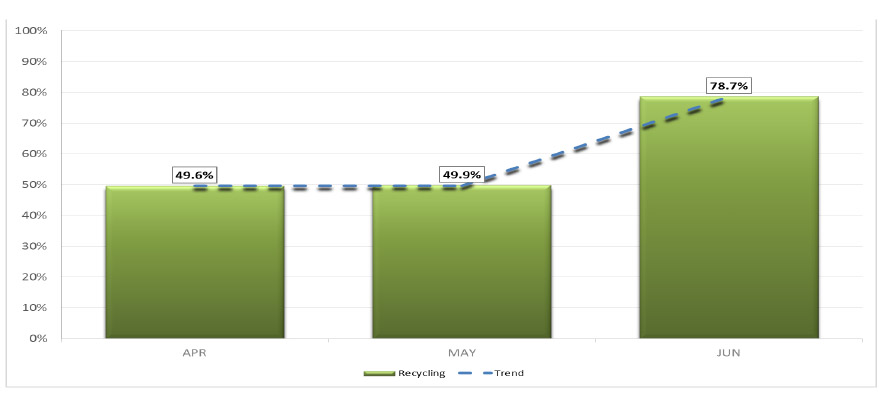
Recycling Volume
The total tonnages for the period above represents 63 % of the physical volume. However, this performance includes the site establishment phase, so what is remarkable is that the volume rocketed to 78.7% in June, once the site was fully established!
Environmental benefits achieved for the period.
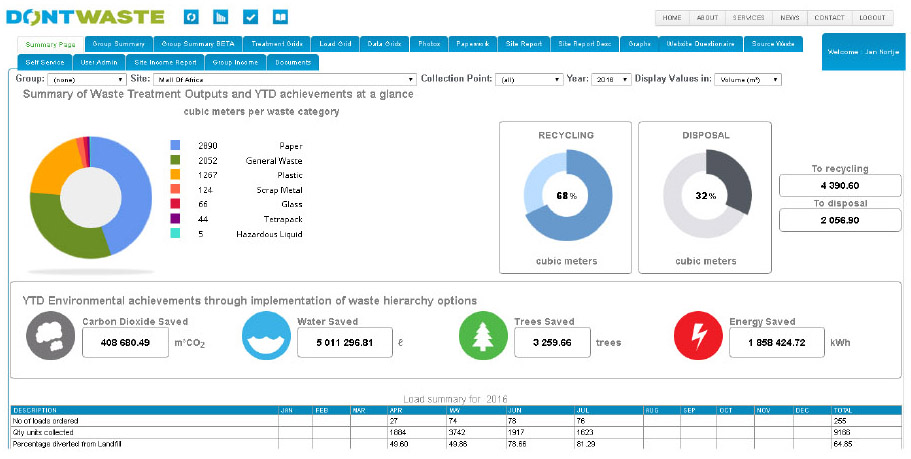
Major environmental benefits accrue through the process of waste minimization and the recovery and recycling of waste materials. Don’t Waste systems quantify and illustrate these benefits as they apply to a Customer’s actual and specific waste stream for the period selected. These metrics based on the US EPA (WARM) model. MOA outcomes below for the period April to June 2016.
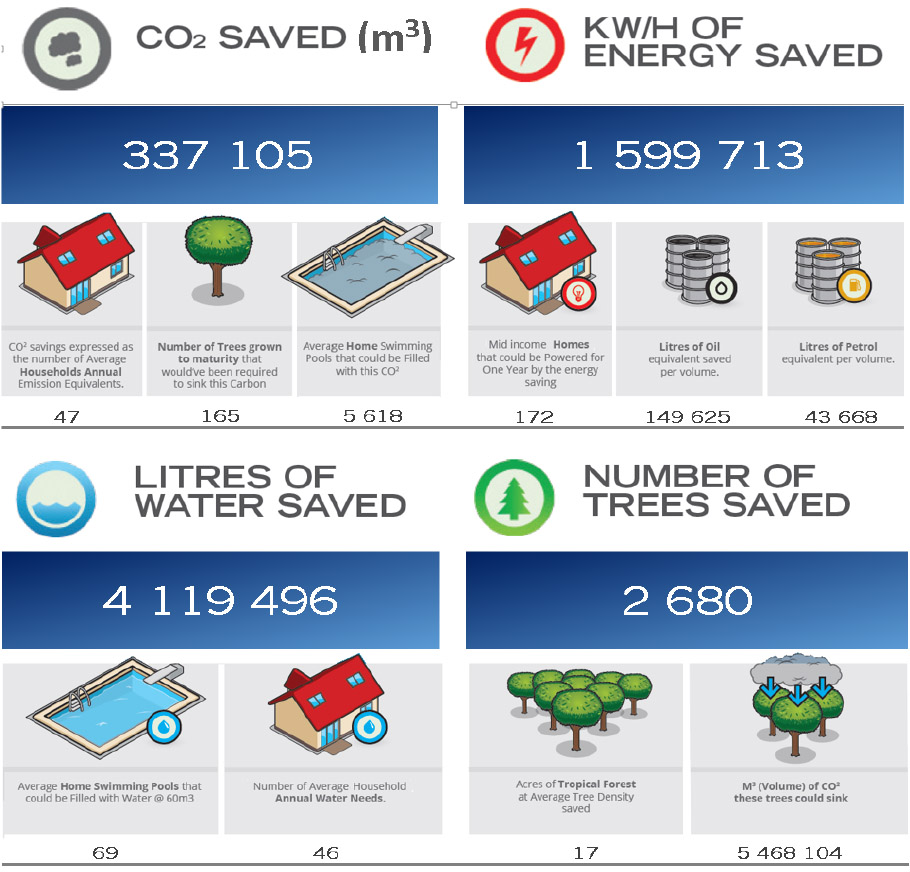
This in only three months! Well done Atterbury for this commitment to the environment!
The results also mean a huge and corresponding saving in waste costs and a substantial recycling revenue. Savings which more than pay for the implementation expense with a forecasted net saving of R 1 376 834.33 per year! Truly sustainable practise with benefits to environment and all stakeholders!
Site operations (optional)
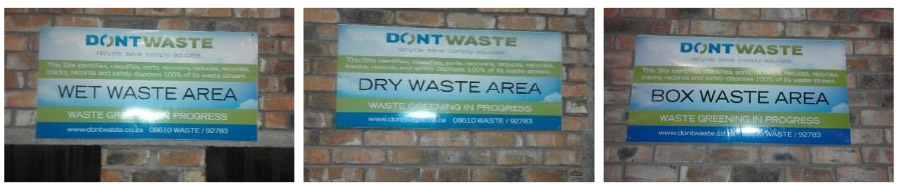
The waste operations consist of 3 separate and distinct waste areas, wet, dry and box (bales). The “wet” area is typically for food waste, non-recyclables and “contaminated” recyclables, collected in specifically allocated green lid bins. The “dry” area is set aside for recyclables sorted from the orange lid bins, whilst the “box” area is where all the various grades of recyclables are baled for collection by the recycling service providers.
Tenants are responsible for separating the waste at source into either a green or orange lidded bin. Once the bins are full, tenants are required to bring them to the properly demarcated “Full Bins for Sorting” section of the respective area for sorting. They then sign and exchange their bins for clean empty bins.
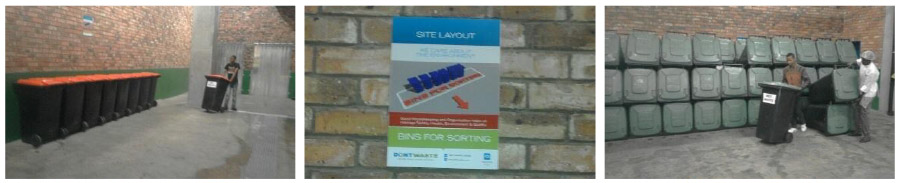
In the “wet” area, the lined up bins are then sorted, extracting any recyclable material that may have been disposed of in the wrong bin. Once sorted, the waste bins are lined up for dumping. Any extracted recyclables are then moved by trolley to the “dry” area.

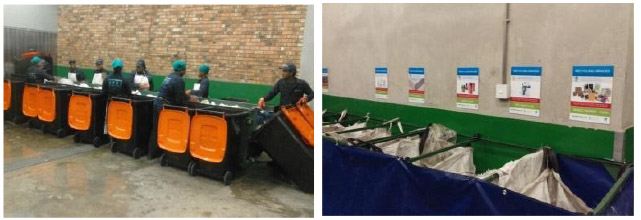
The “dry” area’s focus is recycling. The orange bins are then lifted and tipped onto the conveyor a sorting. As the waste moves along the conveyor, each sorter extracts the different recycling grades, such as, but not limited to, plastics (PET, HDPE, LDPE), paper (HL1, CMW), cardboard (K4) and cans, placing them into 550 L bulk bags. Once a 550 L bulk bag is full, they are transported with a trolley to the “box” area for baling. Any non-recyclables are disposed of in wastes bins for dumping.
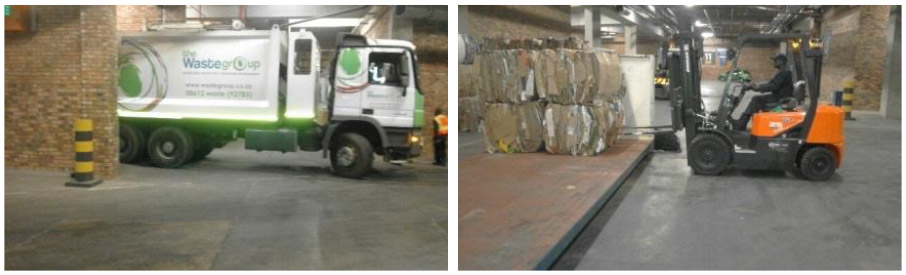
In the “box” area, the separated bulk bags of recyclables are then baled using 2 balers (1 for cardboard and the other for plastics, paper and cans). Bales are then weighed (recorded) and stacked with a forklift prior to collection. Empty bags are returned to the “dry” area.
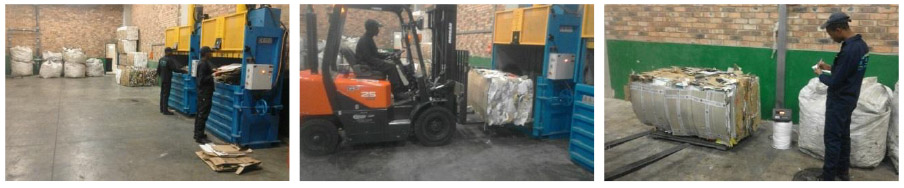
When sufficient waste bins (for dumping) or bales (for recycling) have accumulated, the site supervisor will place an order via the MOBI app or Call Centre for the disposal (waste bins) or recycling (bales), service provider to collect the respective loads. The corresponding driver will sign a collection slip, illustrating the load details (number of bins/bales), which is kept on record.
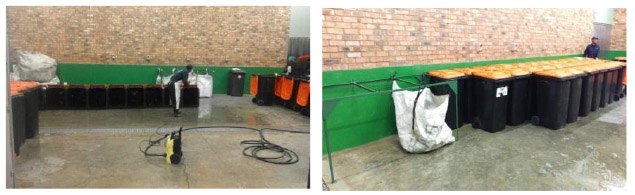
Once the bins (wet or dry) are sorted and emptied, they are properly cleaned using a pressure washer and environmentally friendly chemical products. The clean bins are stacked neatly in the corresponding area to dry and be reused. At the shift end, each waste area is cleaned and prepared for the following shift.
All data and loads are tracked and managed through the Don’t Waste management system with fully auditable data. MOA dashboard YTD as at mid July 2016 below.