

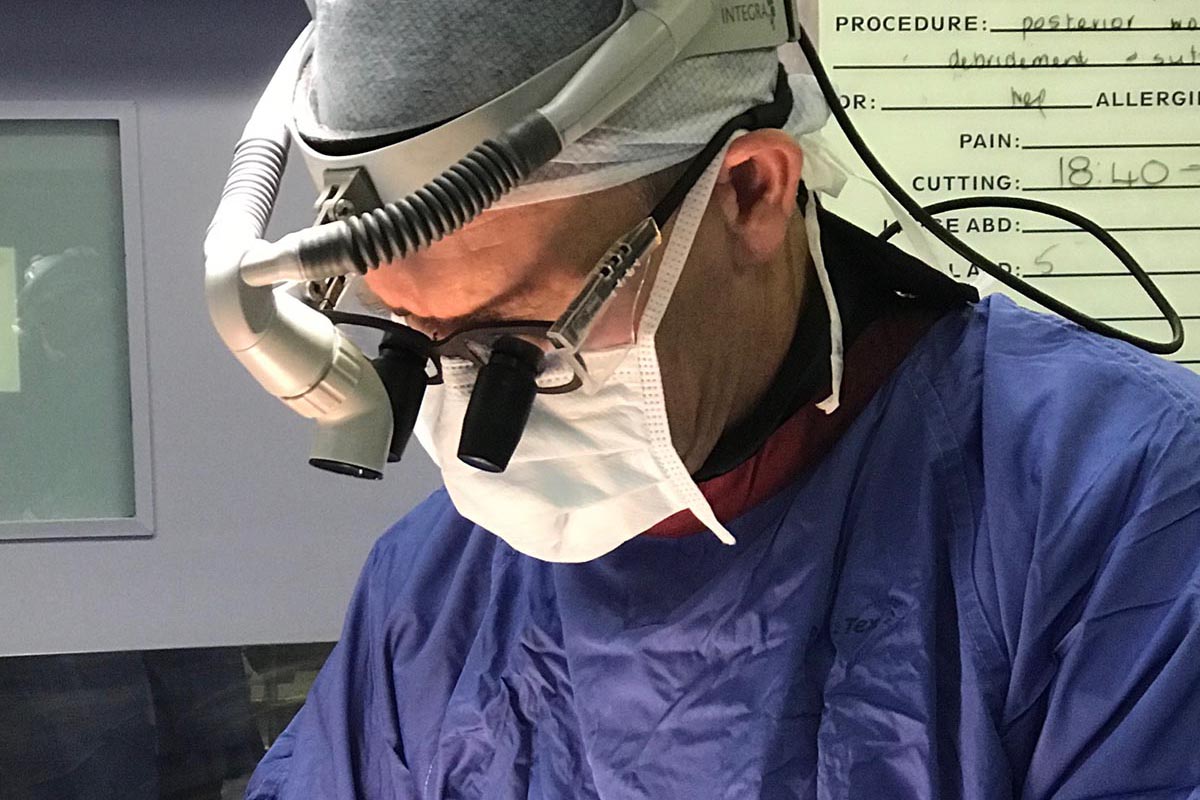
The Club Surgical Centre is a unique facility in Gauteng, offering a bouquet of specialists under one roof, with a state-of-the-art day hospital where cutting-edge procedures can be performed. Spine specialist Dr Louis Nel is one of the expert physicians who will be working from this new facility
When are you moving into your new consulting rooms at The Club, and do you know yet when you’ll be performing your first procedure in the new day hospital?
We’ve started moving in and will be fully functional on 9 April. Our partners Burger Radiologists are operational already.
How did you become involved with this groundbreaking new facility, and why did you decide to move in here?
The rise in costs to treat patients in conventional (acute) hospitals has been so dramatic over the years that it is becoming unaffordable for many. Many procedures can be moved to day clinics, which leads to significant reduction in cost. In the United States 40 percent of spine procedures are performed in day clinics which cut medical costs by as much as 50 to 80 percent. And if the cost of almost half of all procedures are reduced, more funding will be available for bigger, more complex, acute hospital cases.
What makes this facility so attractive is that it brings together a group of spine specialists so that we share resources and equipment – with less duplication comes more cost effectiveness.
Club Surgical Centre will become the diagnostic hub of Spine Africa, a multidisciplinary group consisting of different surgical and nonsurgical specialities focusing only on the diagnosis and treatment of spinal problems. In this centre day procedures will be done, and more complex cases will be channelled to an overnight surgical facility or an acute hospital.
What, in your mind, sets this facility apart from what else is on offer in the area? What excited you about the prospect of working from here?
The location of the Club Surgical Centre is ideal to see patients from all over the country. The area and associated environment makes it visit-friendly for patients and their families.
Burger Radiologists is installing a standing MRI, the first one in Africa. This technology provides optimal diagnosis with the patient in a standing, functioning position instead of lying down as in the conventional method. More precise diagnosis of pain-causing pathology leads to more precise treatment of the pain source, which might also lead to smaller surgeries, with a faster healing time for patients, who can be on their feet again sooner.
Tell us more about the journey that brought you to this speciality.
The field of the spine has become extremely specialised due to the advances in technology. This has quite organically led to the field developing so that you now have doctors who specialise in spine, in contrast to general neurosurgeons or orthopaedic surgeons who handled spinal procedures too. The spinal field now incorporates many nonsurgical and surgical options, and the more options available to the specialist, the better result will be achieved for the individual patient.
I was neurosurgically trained and started working with my father who was a spinal neurosurgeon in 1997. This led to me focusing on the subject of spine only, and I left general neurosurgery in 2000. During the last four years we’ve started visiting the US – where day clinics have been the norm for decades – specifically to look into their success and failures. The idea was to start a multidisciplinary centre in South Africa where only spine problems would be treated, and here we are.
What are the most typical concerns that your patients present with; and what procedures do you most frequently perform?
Neck and back pain are the leading cause of people not being able to function optimally and work in the world. This places a huge financial burden on society the world over.
The old view of back pain (from both the general public and many surgeons) is that the way to treat it is by abstaining from work with bed rest, pain medicine and maybe physiotherapy; and if that doesn’t work, getting surgery – which relates to decompression and, in many cases, spinal fusion. This has led to many patients getting unnecessary surgery, and the wrong surgery, requiring extremely long recovery times.
Getting the correct diagnosis and considering all treatment options, with surgery as the last resort is very important to the patient population we see. If surgery is contemplated, we work towards the smallest procedure with the longest-lasting result that will immobilise patients for the shortest time so that they can return to normal life as soon as possible.
We are treating quality of life. Preserving motion is very important so that the patient doesn’t need to scale down his lifestyle and activities.
Have there been any major breakthroughs in the field that have informed your practice over the recent past?
Major breakthroughs have been seen over the last 30 years, and can be seen in three categories: diagnostic, conservative treatment and surgical treatment. There have been many diagnostic breakthroughs, but the standing MRI, as mentioned before, is a game-changer in evaluating back pain and planning treatment.
Big spine operations as the norm have become outdated, thanks to the development of minimal invasive surgery, with muscle-sparing techniques, aided by advancing technology.
Image-guided surgery, neuronavigation, computer-guided surgery and endoscopic surgery have enabled smaller procedures that cause less muscle damage and allow patients dramatically faster recovery time. With endoscopic surgery we can now offer awake and same-day procedures, allowing patients to return to work within days.
Due to advances in technology and surgical approaches, all surgical patients, even scoliosis surgery patients are getting up the second day of surgery, and are able to walk sit and stand.
We are dedicated to giving the best spinal opinions and treatment, combining first world technology at an affordable price for the best patient result.