

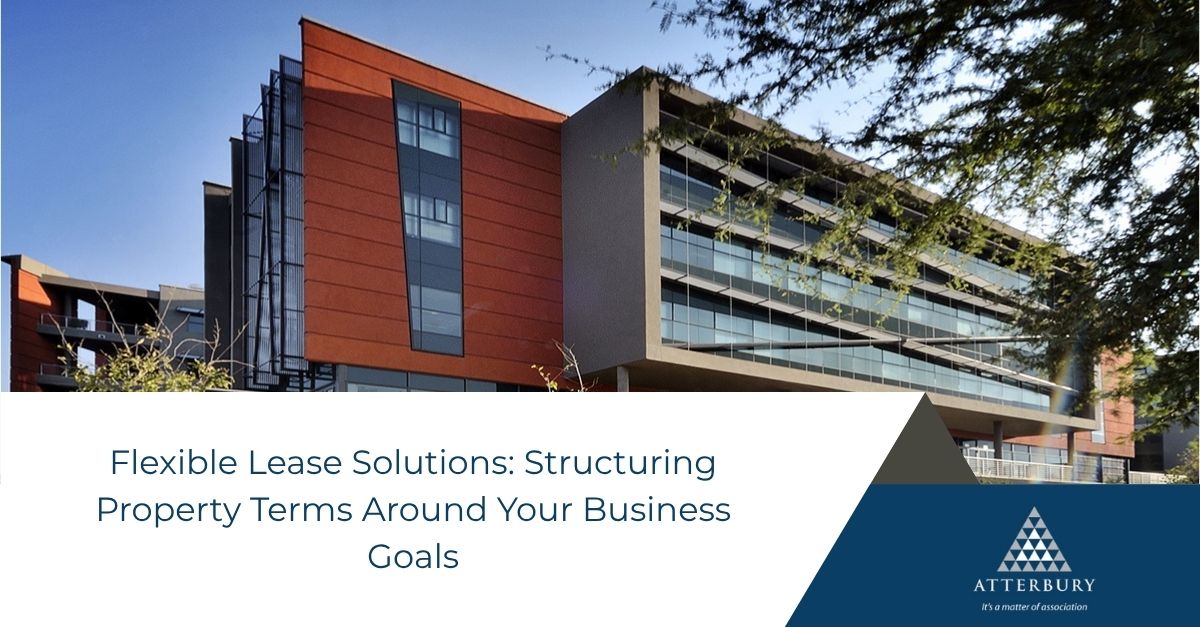
A standard five-year commercial lease with fixed annual escalations looks neat on paper. For a CFO at a growing business, though, that neatness can become a straitjacket. Not because of the property itself, but because the terms don’t bend when the business does.
Growth isn’t linear. Headcount projections shift mid-year. Some quarters are tight on cash, others have room to push forward, and your property commitment shouldn’t pretend otherwise. When lease terms can’t accommodate that reality, the premises stop being an asset and start working against you.
Flexible commercial leasing solutions change this dynamic. A lease structured around how your business actually operates, rather than a one-size template, gives finance teams the room they need to plan properly.
Why Standard Lease Terms Create Problems for Growing Businesses
Most commercial leases are designed to give the landlord predictability. Fixed terms, uniform escalations, early-termination penalties, limited options to expand or reduce space. If your business is stable and your space needs won’t change for five years, that arrangement works well enough.
Growing businesses rarely sit in that position. A company scaling from 80 to 200 employees over three years genuinely doesn’t know how much floor space it’ll need by month thirty. A retailer testing a new market can’t justify a ten-year commitment when the first twelve months are still proving the concept.
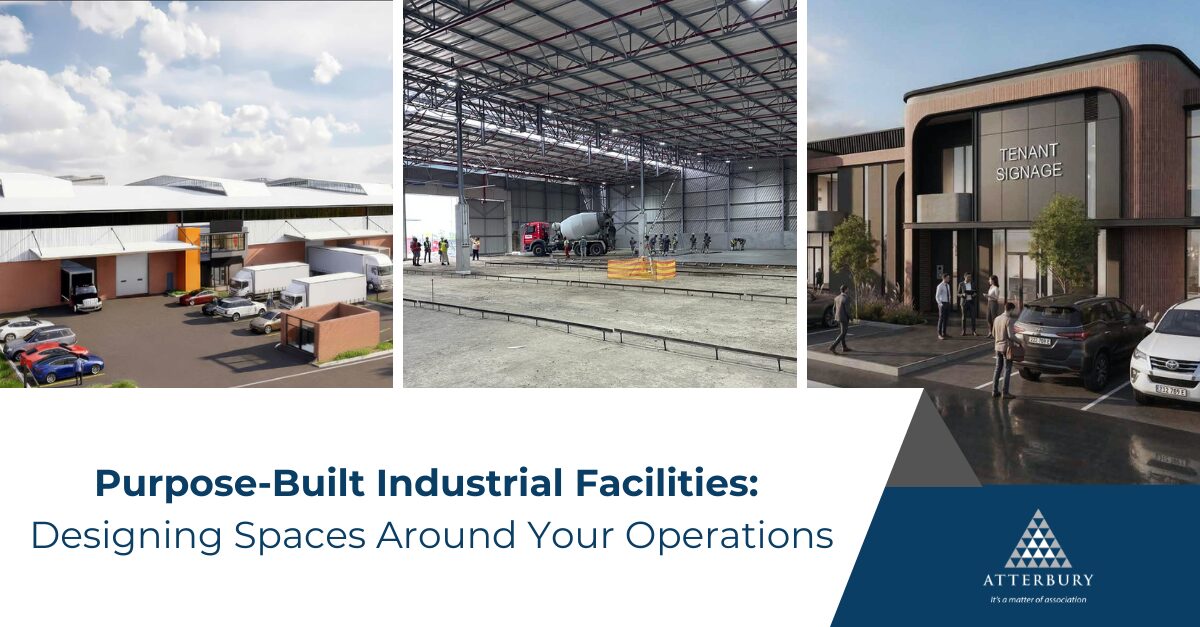
Industrial operators face their own version of this. Supply chains evolve, warehouse configurations change, and what made sense when the lease was signed may look completely different two years in. The result, in all these cases, is a gap between what the lease requires and what the business needs. That gap costs money, whether it shows up as empty desks, underused warehouse bays, or missed timing on an expansion.
Lease Structures That Work With Your Cash Flow, Not Against It
Cash flow predictability matters to Finance Directors as much as the headline rental figure. Sometimes more. A good lease structure doesn’t just reduce cost. It makes property spend plannable.
Take graduated rentals. Starting at a lower base and stepping up as revenue scales is particularly useful when a business is absorbing upfront capital, things like fit-out costs, equipment purchases, and the general expense of relocation. You’re not stacking a full market rental on top of all that from day one.
Rent-free periods during fit-out serve a similar purpose, giving businesses financial breathing room exactly when capital demands peak. In retail, turnover-based rental components tie a portion of the rent to actual trading performance. The property cost moves with the business cycle instead of sitting rigidly above it.
These aren’t unusual mechanisms. They’re established leasing tools. The real question is whether your property partner builds them into your agreement from the outset, or whether you’re left trying to negotiate them out of a standard template after the fact.
Matching Space to Growth (Without Overpaying or Scrambling)
Space needs change. Sometimes it’s a gradual ramp, sometimes a sudden jump after a contract win or acquisition. A lease that accounts for this from the start saves businesses from a lose-lose choice: pay for space you’re not using yet, or find yourself short and competing on the open market for more.
Expansion clauses are the straightforward answer. They give you a contractual right to take up additional space in the same property as it becomes available. For a business with a clear growth trajectory, that’s one less thing to worry about. You’re not bidding against outside tenants for a floor in the building you already occupy.
Contraction options address the other side. If a division consolidates or circumstances shift, reducing your footprint without breaking the entire lease protects the business from carrying dead space. Landlords who offer this aren’t being generous. They’re being practical, because a right-sized tenant who stays is worth more than one who leaves.
We structure these provisions differently depending on the tenant. A logistics company building out a distribution network has scaling needs that look nothing like a professional services firm adding consultants. The lease should reflect that difference.
Connecting Lease Terms to Your Strategic Planning Cycle
Property decisions touch finance, operations, and strategy simultaneously. When a lease runs on an arbitrary timeline that doesn’t match your planning cycle, it creates one more variable your leadership team has to manage around.
A practical example: your business runs on a three-year strategic plan. A five-year lease with a break clause at year three gives you full flexibility to reassess at the moment that actually matters. Pre-agreed renewal options remove renegotiation uncertainty and protect against market-rate surprises when you do decide to stay.
Industrial tenants often deal with a different set of timing considerations. Fit-out amortisation, equipment installation schedules, supply chain contract durations. All of these shape what the right lease length looks like. Two operators in the same industrial park might need entirely different terms depending on how their businesses run. That’s not a complication. It’s the reason cookie-cutter leases fail.
The value of a leasing team that understands your business before drafting terms should be obvious. But it’s surprisingly rare. Most term sheets arrive before anyone has asked what your three-year plan looks like.
How to Tell if a Leasing Partner Will Actually Be Flexible
Not every property company works this way. Many start from standard templates and only adjust at the margins if pushed.
A couple of signals to look for: do they ask about your business model and financial structure before presenting terms, or do you receive a generic proposal first? Are expansion and contraction provisions part of the initial conversation, or do they come across as special concessions? And can they point to experience across different asset types, commercial offices, retail, and industrial, so the structure they’re offering has been tested in your sector?
At Atterbury, our leasing professionals work across all three. We’ve structured agreements for businesses at every stage, from companies taking their first standalone premises through to corporates consolidating multi-site operations. The starting point is always the same: understand the business first, then build the lease.
Your Next Lease Could Work Harder
Your property commitments don’t have to pull against your business plan. The right lease structure turns premises into something that flexes with growth, supports cash flow, and fits the way you actually operate.
Get in touch with our leasing team to explore how a tailored lease could work for your next move.