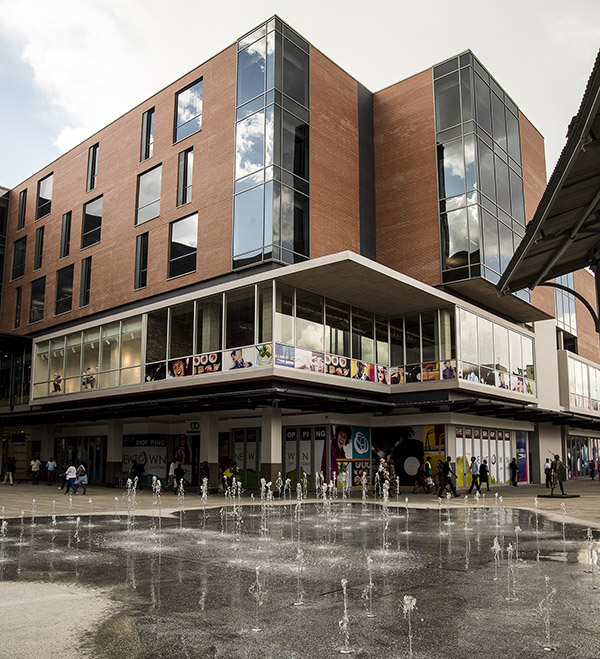



Drive south over the Nelson Mandela Bridge into Johannesburg, turn right and you find yourself in Newtown, an area steeped in history but now also the brand-new home of Atterbury Property and Attacq’s Newtown Junction development.
A century ago this is where the community of Brickfields was forcibly removed after the reported outbreak of the plague, and the area was then burnt to stop any spread of the disease. Newtown was born out of the ashes, including a marketplace, and eventually, in the early 2000s it was declared a heritage district. The heritage label brought with it very specific building restrictions, which has slowed down modernisation.
Atterbury’s heritage challenge included preserving certain historical structures, including the Potato Sheds that were part of the city’s first produce market, and the market’s Edwardian-era public men’s room. There was also a railway line that ran into the marketplace alongside the Sheds, and two pedestrian bridges over the railway line which had to be preserved and incorporated into the mall’s design.
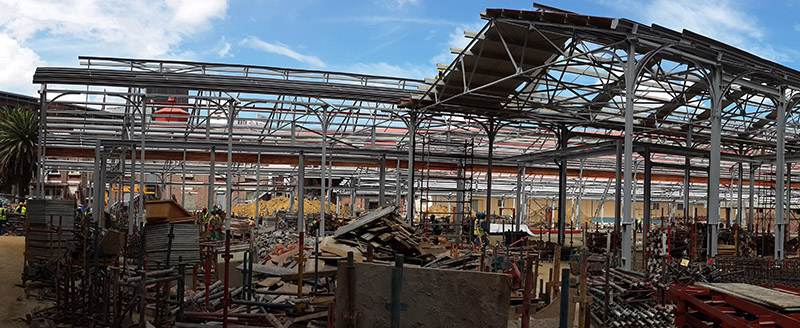
According to development manager Wiehan Strydom the structures were dilapidated when Atterbury first came onto the site, and it was a slow process involving a lot of manual labour to remove them for restoration and then to reassemble them in their original spots once the new mall’s basement was in place.
“But even before we started building, the underground services we encountered were interesting, because the site is so old,” he says. “For instance, during excavation, we discovered a massive antique storm water pipe right under where the mall was going. So you consult with the heritage people, wait for approvals, divert it around the site…”
“Back in those days everything was riveted together, so each rivet had to be removed, catalogued, restored and replaced in exactly the same place; you can imagine the manpower required,” explains Strydom, adding that the retoration of the Potato Sheds alone cost in the region of R10 million.
In the layer of ash laid down in the Brickfields fire they found thousands of artefacts, he says, including ceramic and glass shards, cocopan wheels and animal husbandry tools, all dating back to the late 18th, early 19th century. All of it was collected and processed along with the team of curators from the adjacent Museum Africa, where most of it will eventually be displayed.
Now, 100 years after it was first built, The Potato Shed is a food marketplace again, housing the food court and several restaurants. The old bridges now connect the Potato Shed directly with the Market Theatre. The Edwardian toilet with its restored turret will also be turned into a small luxury restaurant, according to Strydom.
Atterbury and Attacq’s involvement has been 10 years in the making, and finally the new shopping centre is open, in time for the festive season. With shops and cinemas, restaurants and office space, it is bringing a breath of fresh air into the inner city, while paying tribute to a bygone era.