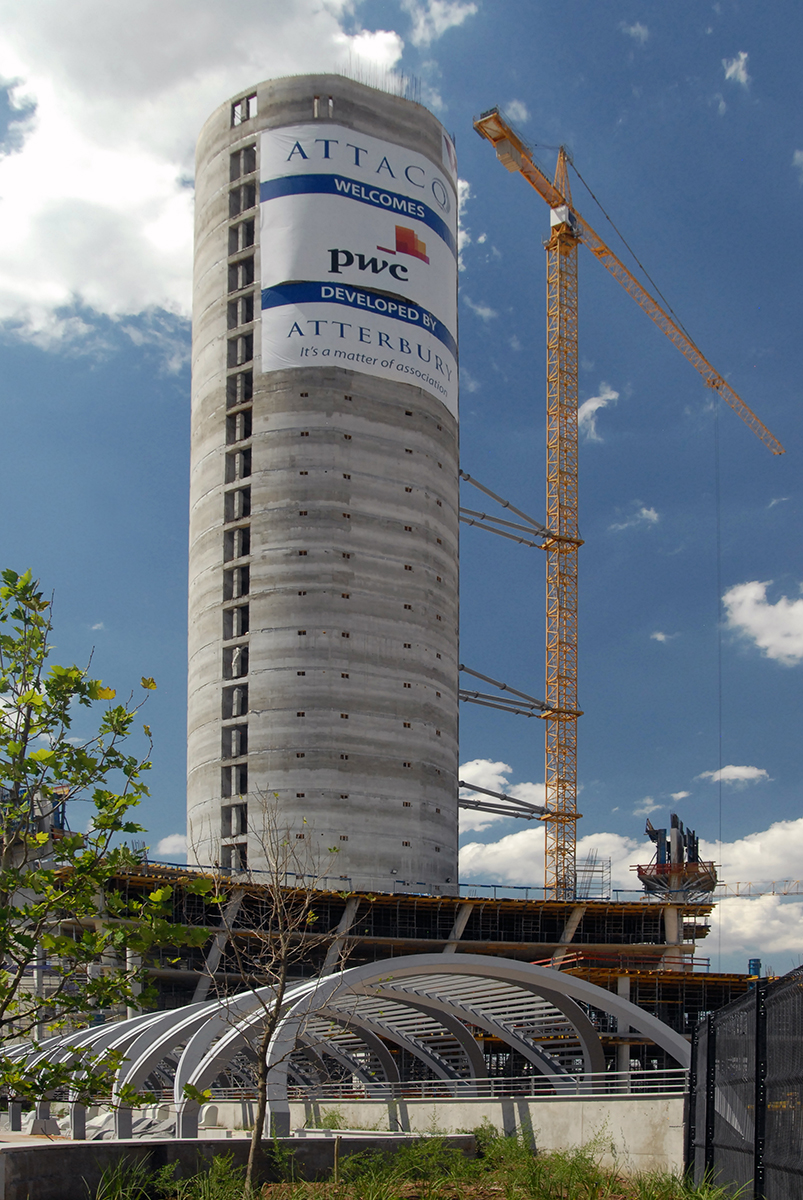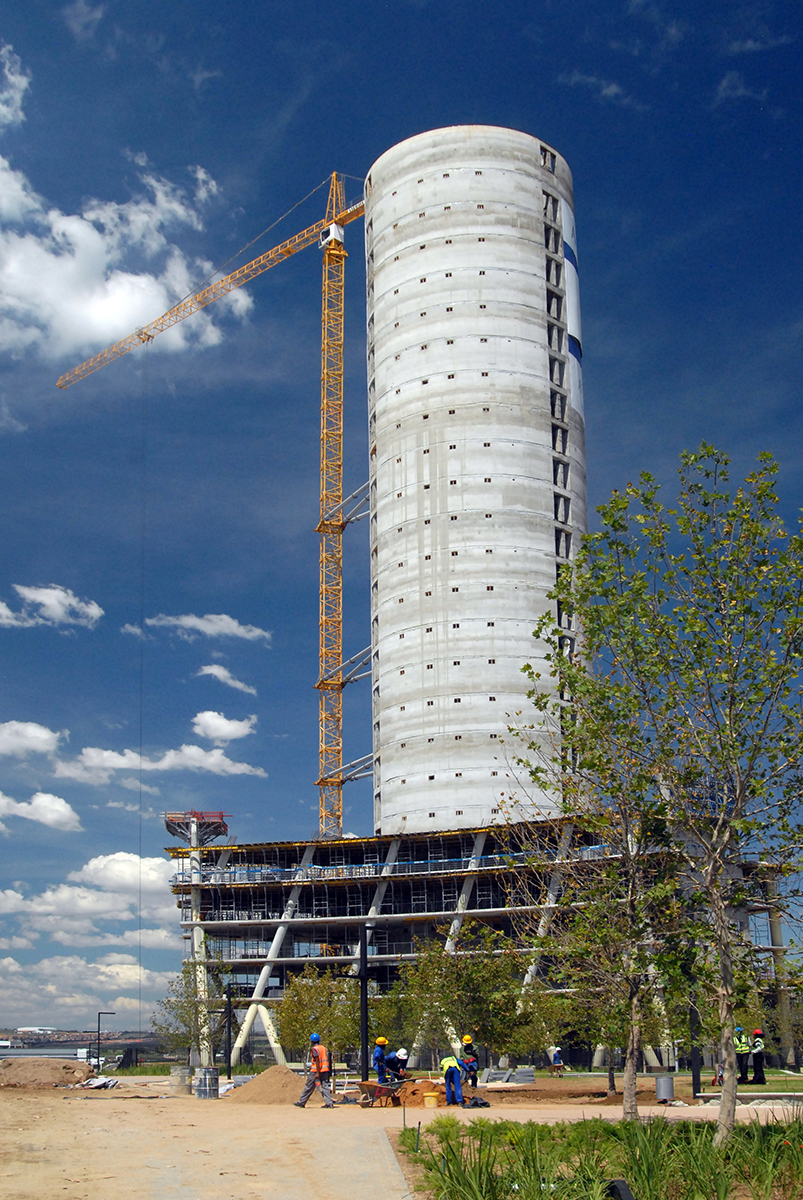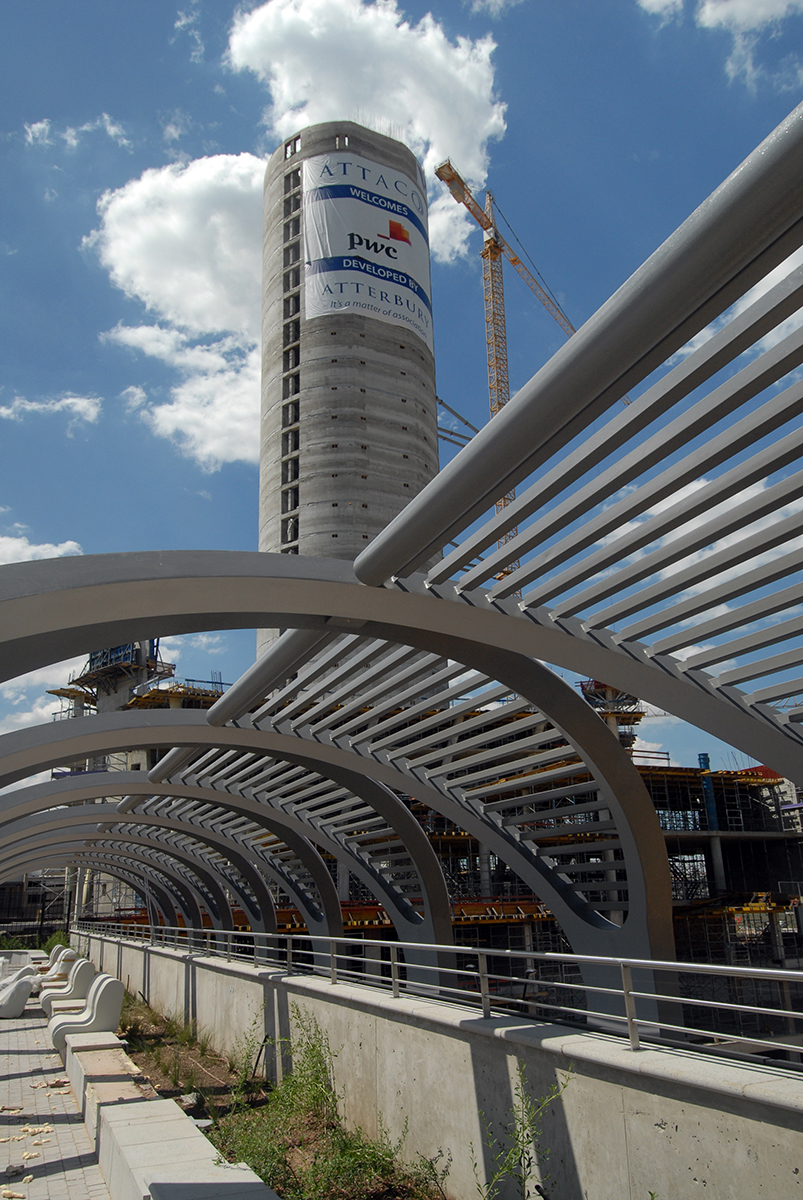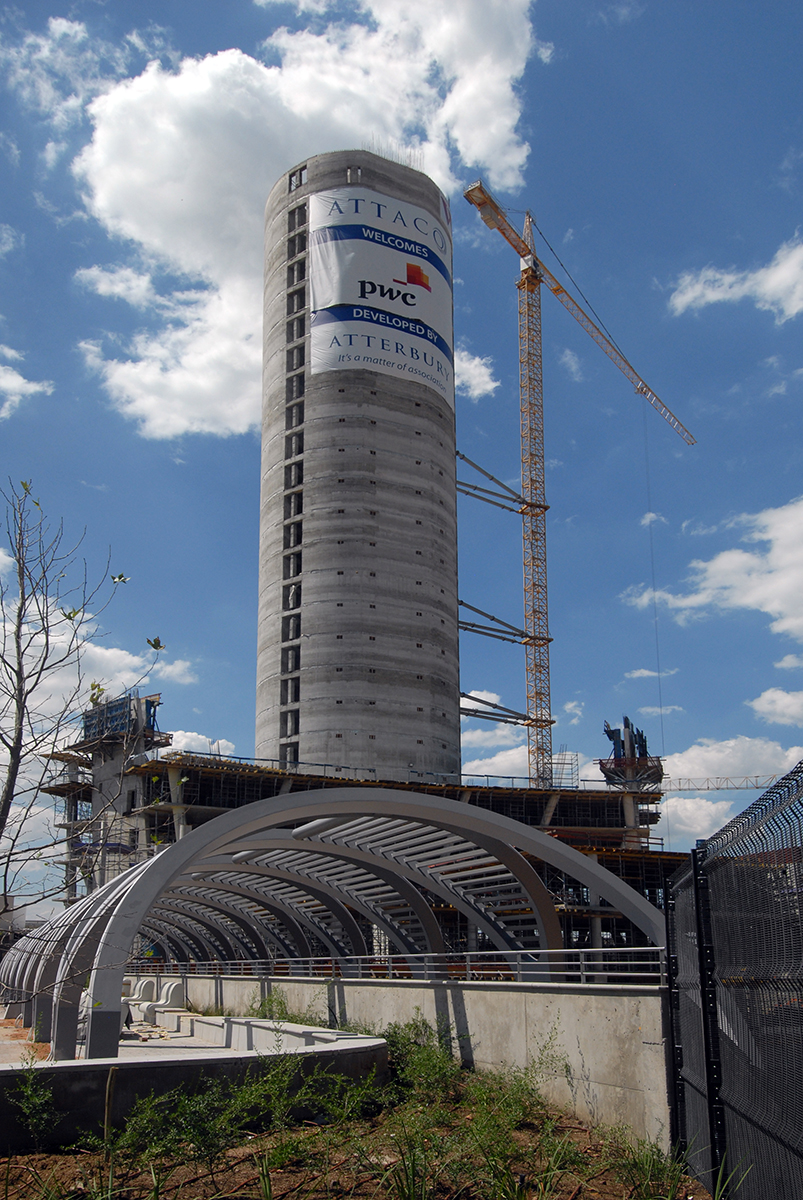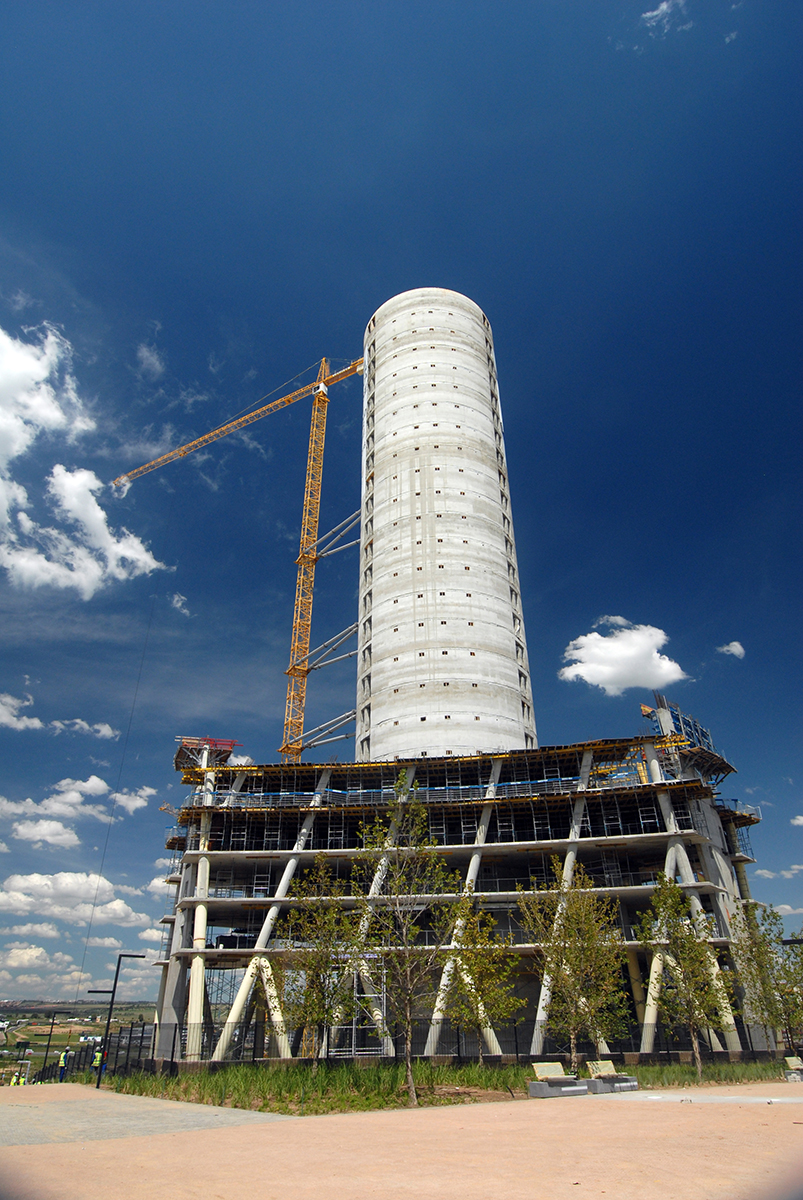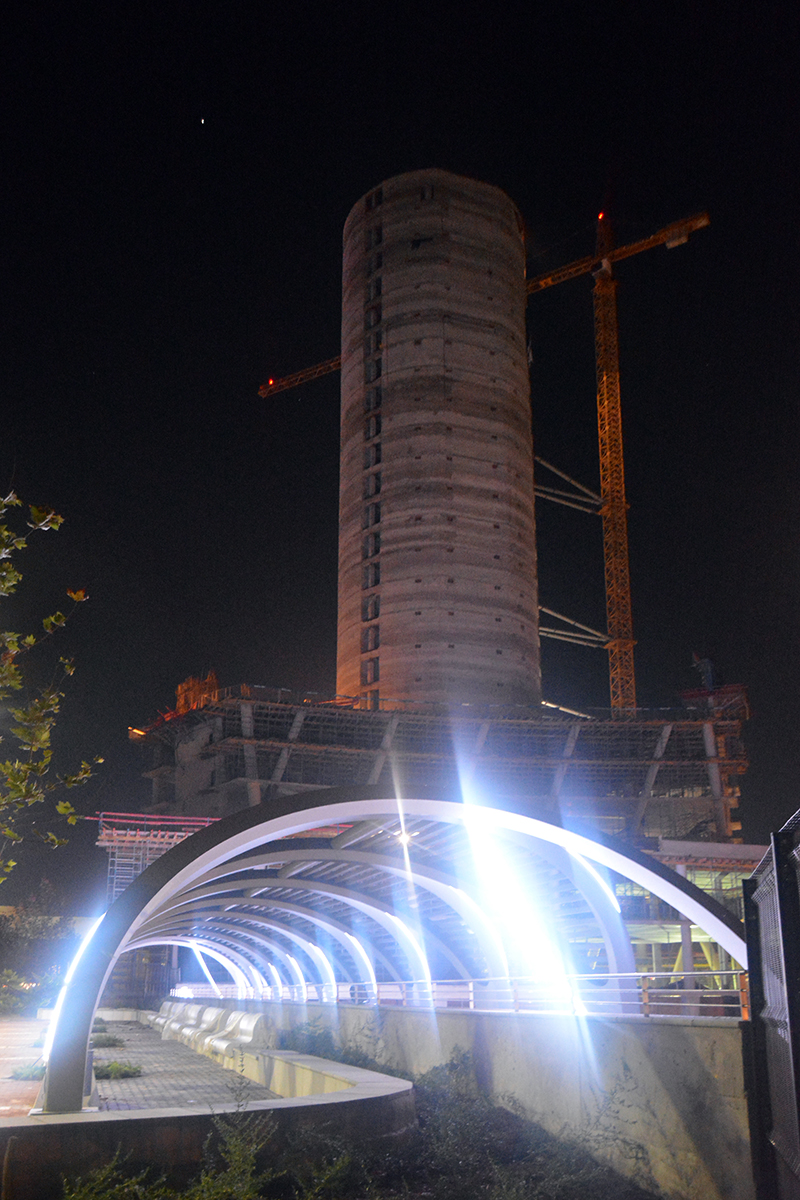


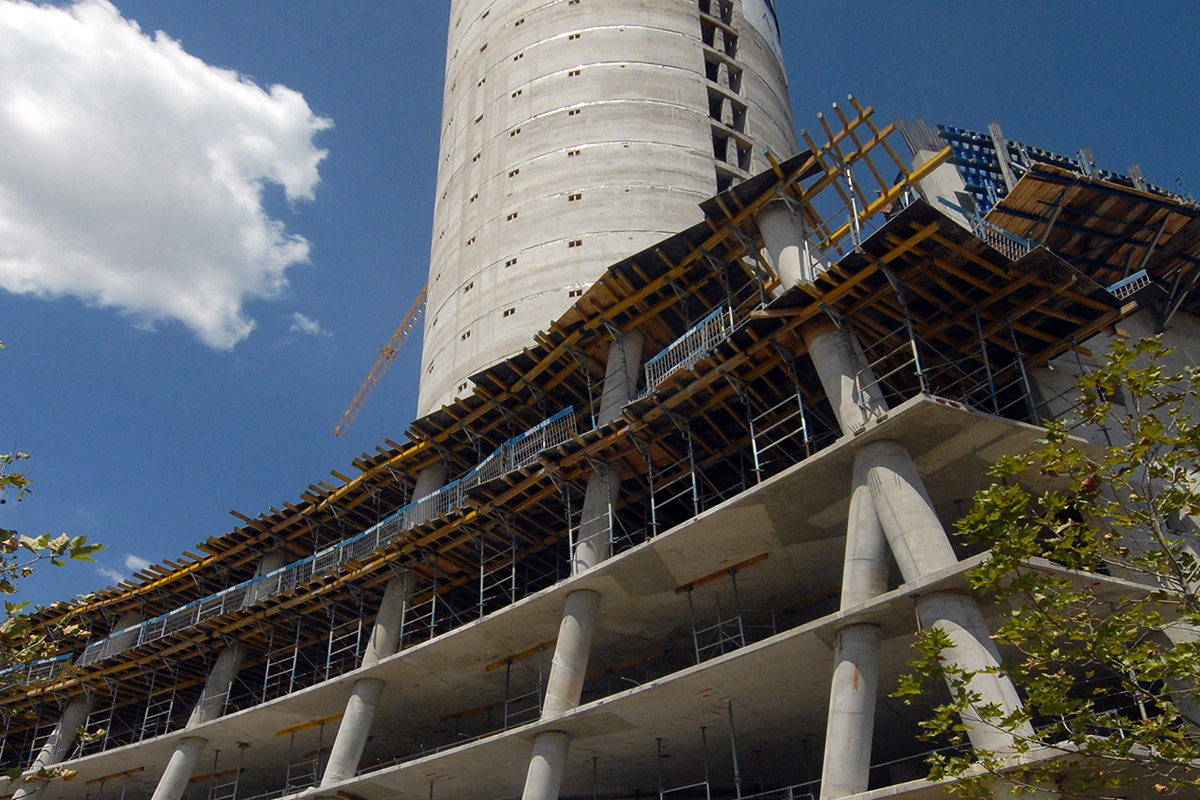
The tallest structure by far in the Waterfall and Midrand area, the new Price Waterhouse Coopers head office has sparked a lot of interest since it started rising alongside the Mall of Africa in Waterfall City. Already almost a year and a half in the making, the building is scheduled to be ready in February 2018, when 3 500 employees will move into 40 000 sqm of ultramodern offices.
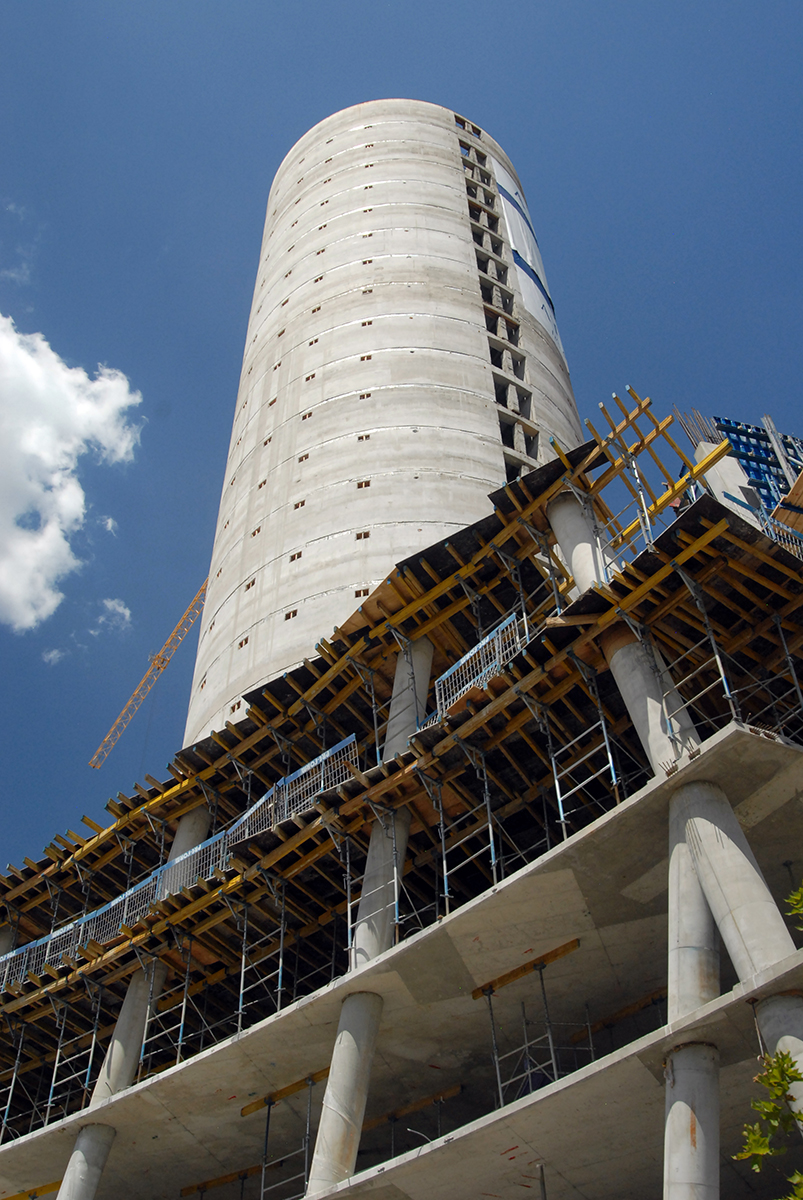
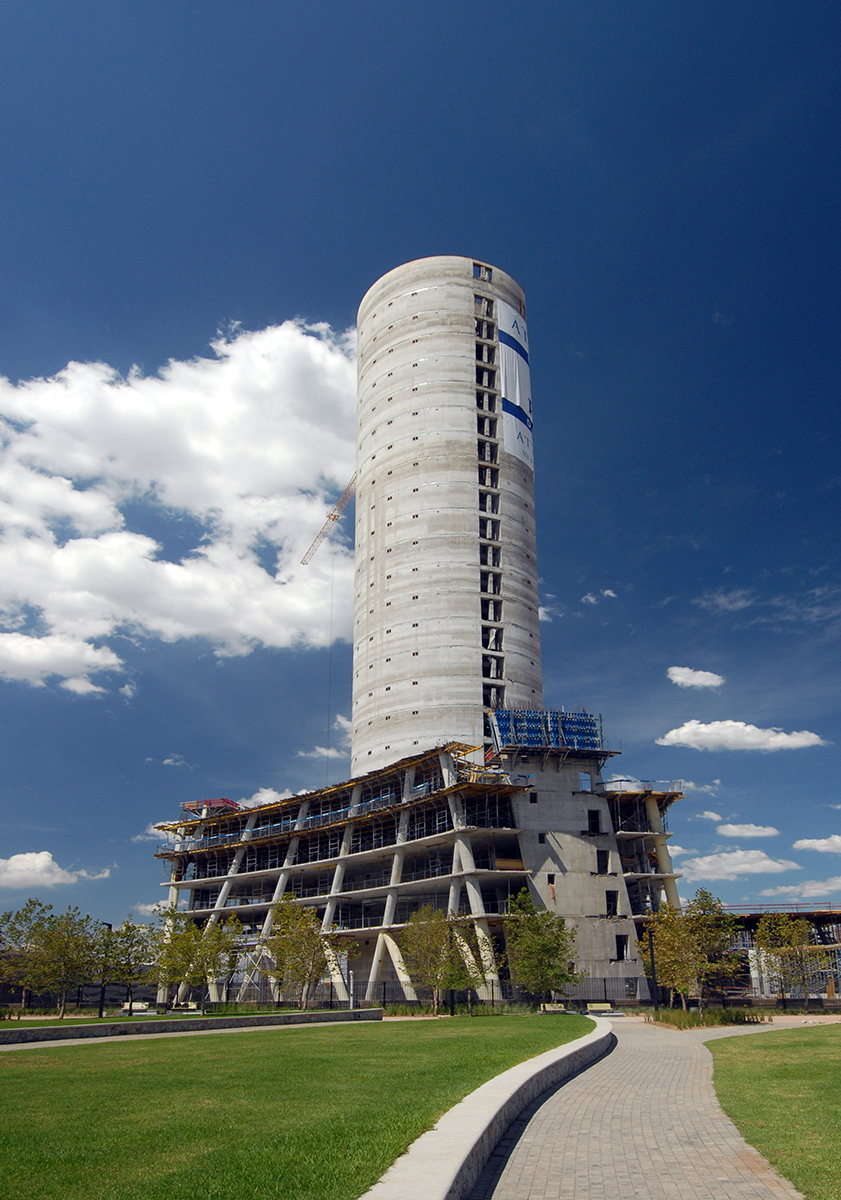
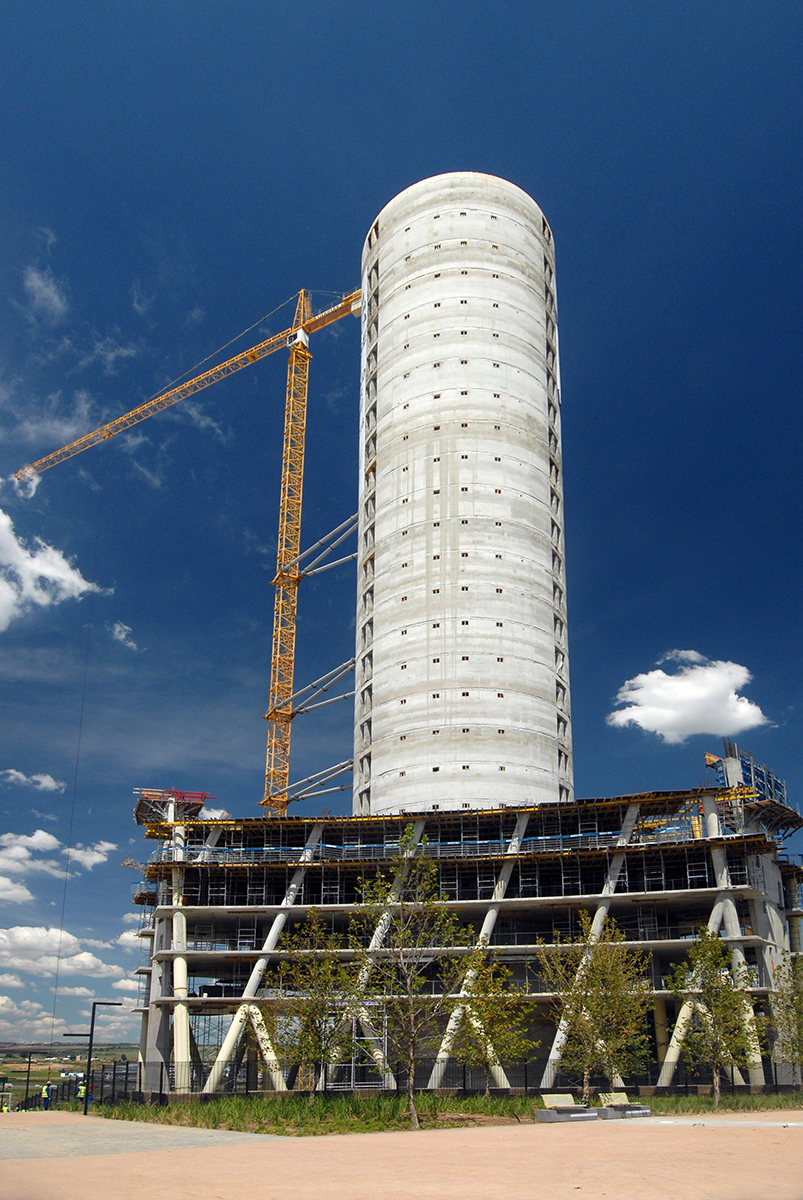
The construction process saw the core of the building going up first to the full height of the building, prompting curious early onlookers to ask the question, why is the building so thin? It is only now, as the rest of the floor space on each storey is being added from the bottom up, that a fuller picture is emerging of the silhouette of this eye-catching building, with its dramatic twist design.
The most visible part of the structure is still the core, and this central space will contain the lifts, toilets and essential services such as the water, air and electrical distribution. It also provides stiffness and strength to the building – similar to the spine and central nervous system in the human body.
According to structural engineer Richard Lawson from Arup, the core of the building was constructed using a method called slip forming, where the concrete is poured continuously within the steel shutters, which moved up at a pace of 2.5m a day. By erecting the core in one operation early in the project, he explains, it speeds up construction of the rest of the building, since you can then just build the floors and columns, rather than waiting for construction of the walls. It also allows more time to install the lifts and central services. Internationally this construction method is relatively common for buildings over ten storeys, but in South Africa it has most recently only been used for forming chimneys and cooling towers.
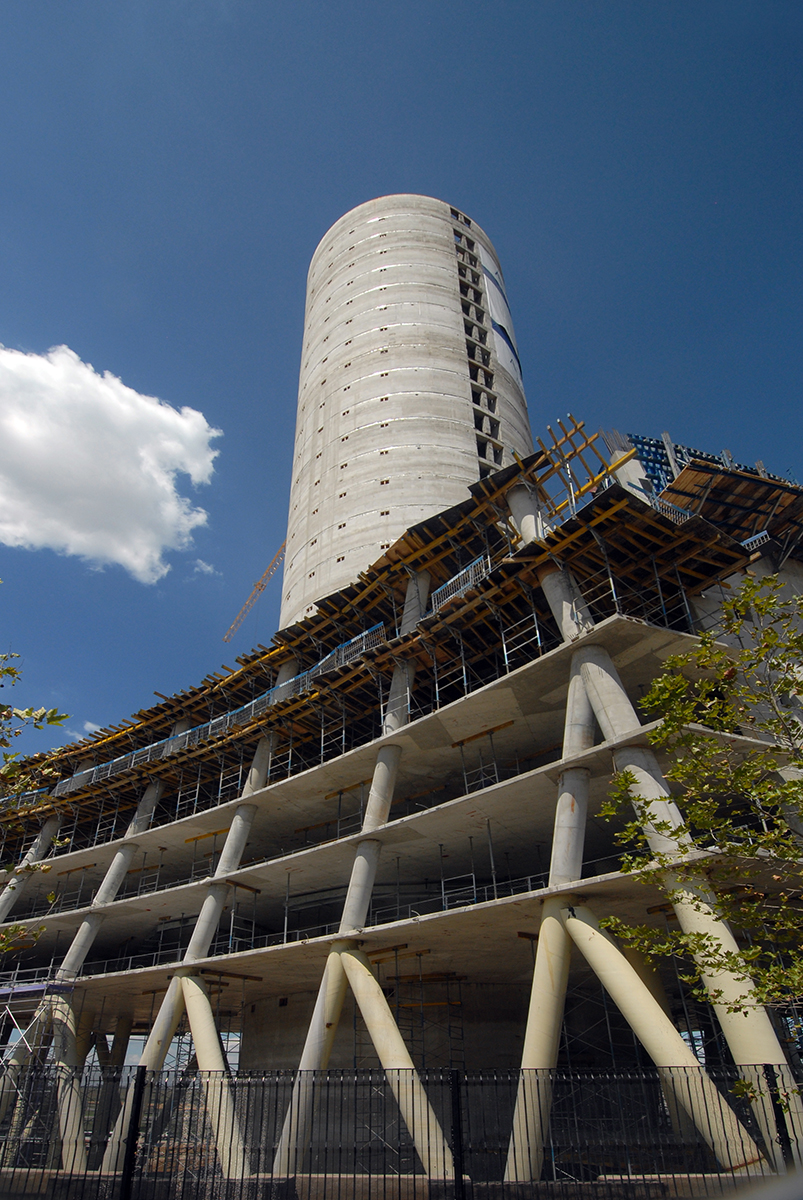
The spiralling geometry of the building creates unusual forces on the tower. “Rather than putting all of this load on the central core which would be very inefficient, we sloped the columns along the façade of the building in the opposite direction,” explains Lawson. “This generates two twisting forces, which cancel each other out. We reviewed many iterations to get the optimal balance and to ensure that this was closely coordinated with the overall geometry and the façade design.”
In a building this tall, the lift system also takes special consideration. According to electrical engineer Harry Meyer of CAI, the tower is one of the tallest buildings recently to be constructed in South Africa, and unique in that the vertical transportation system provided had to be designed to travel the full 25 floors.
The power required for the nine lifts were originally specified by Schindler to be around 1MW, which is enough electricity to power around 1 000 homes… and so another solution had to be found. A visit to similar installation in Switzerland followed, and after many tests and measurements it was possible to reduce the appetite for energy to about a third of the original request. The lifts will travel at six metres per second, which will be a first for South Africa, says Meyer.
And while the lifts will efficiently do its work unseen inside the core, the unique façade of the building will be creating first impressions on the outside. After months of design, procurement and fabrication, the subcontractor Geustyn & Horak has just started installing the glazed façade. The 3D geometry and unique aluminium profiles were developed by Arup and then had to be moved between Johannesburg, Bloemfontein, and back to Midrand for each of the processes required to complete them into story-height frames that are installed on site. The frames are warped to accommodate the twisting imposed by the rotation of each floor relative to the floor below.
Says Arup’s John Abbot, “We believe that this is the first curtain wall in South Africa with twisted unitised panels. The glass was bonded to the frames in G&H’s Johannesburg factory and the complete units hoisted into position on site. When installed they couple together with gaskets and are immediately weathertight without the need for external access to seal the joints.” The vision glass is high performance double glazing using imported soft-coated glass, processed by C&C Safety Glass in Johannesburg.
The first three units were installed on 21 April. At the end of the floor the panels slope backward and this changes with each panel until at the other end of the floor the panels slope forwards by the same amount.