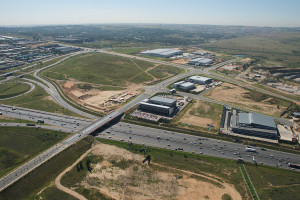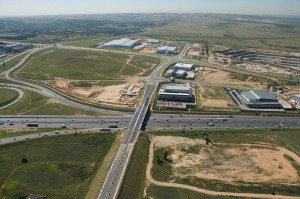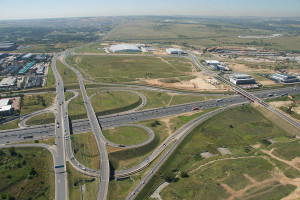


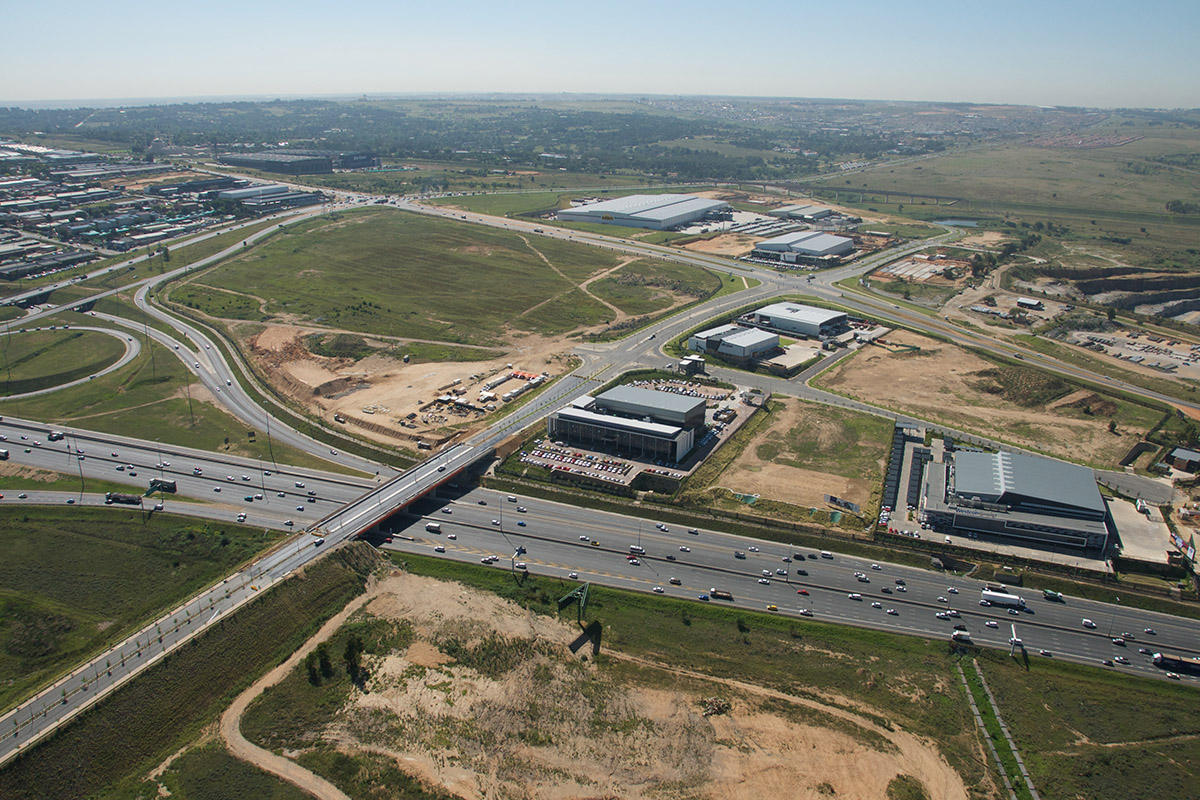
As the new city of Waterfall grows, and with the pending opening of the massive Mall of Africa, efficient road access is crucial. The brand-new Bridal Veil Bridge over the N1 Freeway has been over a year in the making and will open early in April. Derrick Pautz explains the challenges Atterbury faced in spanning the busiest road in South Africa
Can you share the Bridal Veil bridge’s vital statistics?
The Bridal Veil Road overpass bridge will carry four lanes of traffic, a pedestrian walkway and a cycle track over the N1 freeway south of the Allandale interchange in Midrand. The bridge design allows for regular vehicles, as well as abnormal loading weight and super loading weight.
What architectural or engineering aspects were considered when planning the bridge?
The conceptual design of the bridge was dictated by the possible positions where piers could be constructed between the north- and southbound carriageways of the N1, as well as the on and off ramps of the Allandale interchange where the bridge crosses. Accommodation of traffic on the extremely busy N1 between Johannesburg and Pretoria had a major influence on the type of structure that could be built as well as aesthetic considerations of the bridge itself. It was decided that the bridge would follow similar design principles to those applied on the nearby Allandale interchange bridges. Precast M-beams in a pseudo box-girder arrangement with façade panels were decided on. Multi-column piers with vertical fluting similar to those of the existing bridges were designed, together with reinforced earth abutments with fluted concrete panels. Durable concrete and suitable concrete cover to reinforcement were specified to ensure a 100-year design life for the structure.
What were the biggest construction challenges?
The N1 through Midrand is the busiest road in South Africa, so we had to minimise the effects of construction on the traffic flow. There are five lanes south- and five northbound, carrying high volumes of peak-hour traffic, and to ensure safety and prevent traffic backups, Sanral insisted that no lanes could be closed for long periods. That meant that we had to plan the construction of the piers very carefully. Because the road doesn’t have a very wide median where the bridge pier could be constructed, we literally created space, as we needed it by moving the traffic barriers and repainting the lanes for each phase of construction. First we made the median wider using traffic barriers and repainting the lane markings to create narrower lanes around the construction area. Although speed restrictions were in place, the benefit of not closing any lanes was that traffic flowed very well through the construction area, while we had the extra space in the median to excavate the foundation and construct the median pier. When the median pier was completed we moved everything again to create space on either side for construction of the two outside piers. And when everything was finished, the lanes were repainted in their original positions.
So did you manage without any road closures at all?
There were short-term lane closures when the pre-cast beams were placed, but those were limited to weekends and road users were prewarned. As soon as the beams were placed, construction could proceed over traffic with proper protection for falling objects.
How long did construction take?
The total construction period was 16 months, which was quite tight for a bridge of this size.
Where does the bridge get its name?
All roads within Waterfall City are named after waterfalls in South Africa, including Magwa and Bawa Falls in the Eastern Cape; Karkloof, Tugela and Howick Falls in KwaZulu Natal; and Lone Creek, Berlin and Bridal Veil Falls in Mpumalanga.
How many cars do you anticipate will drive over the bridge daily?
The bridge and approach roads are designed for a user capacity of 2 000 cars per hour in each direction and we anticipate this kind of use in the morning and afternoon peak times as the office development in the city progresses over the next 15 years. The Mall of Africa will also induce high traffic volumes over weekends and peak shopping times, but we’re comfortable that the road infrastructure we have designed and implemented will be more than sufficient to handle the projected traffic volumes.
When is the bridge officially opening, and is there any kind of bridge-wetting ceremony planned?
The opening date has not been finalised yet as there are other roads in the city that need to be complete first; to ensure that the entire network is functional before increasing local traffic. And no, we haven’t planned anything more formal than a big site braai to celebrate the project completion and thank the professional team and contractors for delivering an extremely successful project.