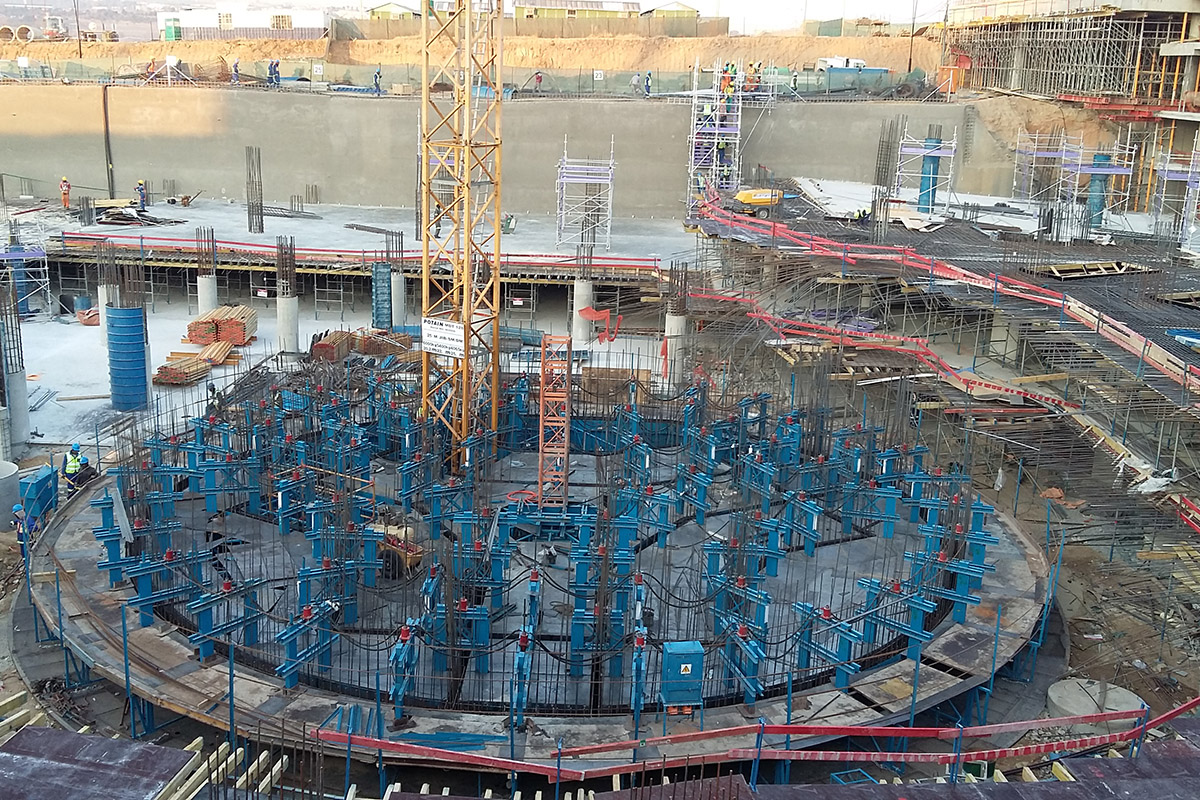


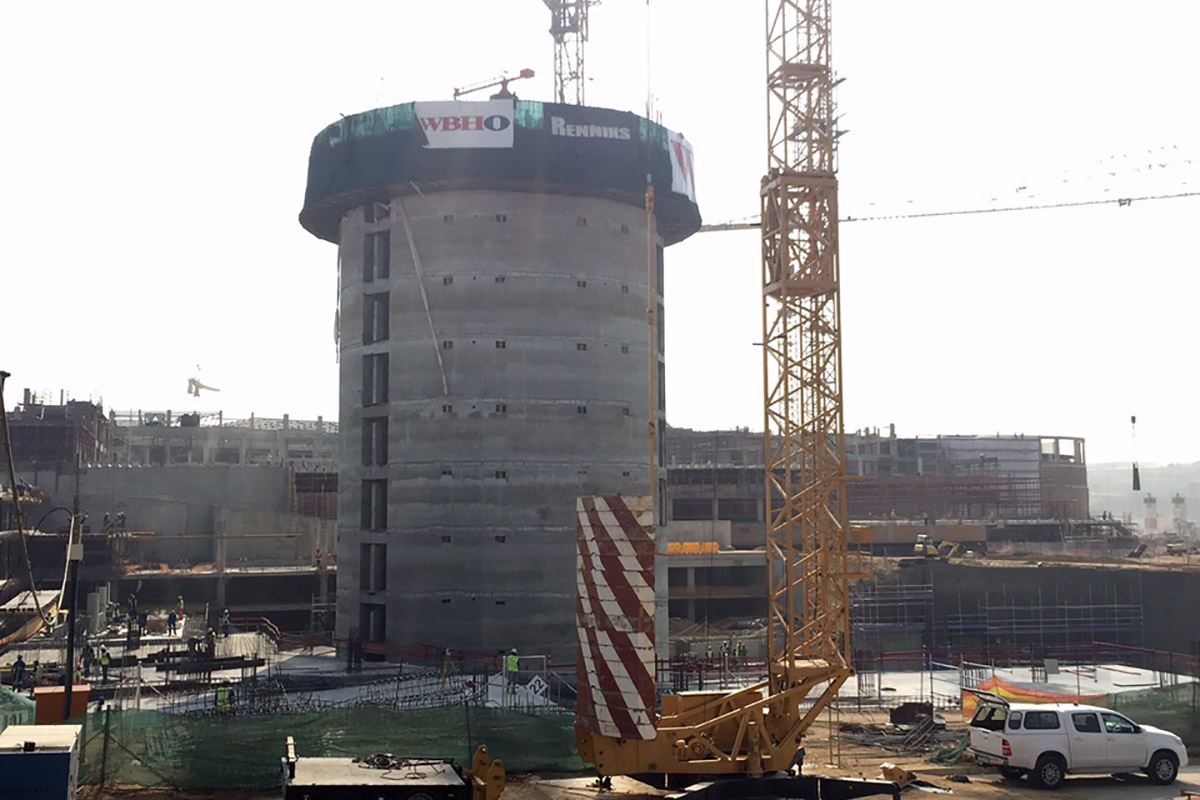
It’s all systems go on the site where the new head office for PriceWaterhouseCoopers is rising out of the earth in Waterfall City. Atterbury’s first high-rise building with its architectural twist design has presented a number of interesting challenges. Atterbury’s Director of Construction Jeanne Jordaan takes us on a virtual tour.
What had to be done differently in terms of approaching this project, considering the sheer size of the building compared to what Atterbury has done before?
Due to the height of the building we had to involve the contractor from the design stage. Special “build ability” sessions were held to discuss material handling, access and construction methods. We also have appointed ARUP as facade engineers due to the height and “twist” of the glass facade. Wind-tunnel specialists were appointed in the UK to model the effect of wind on the building and the solar reflections on the curved glass were modelled to determine solar “hot spots” in the surrounding areas. There will be a system of staggered beneficial occupation dates and hand-over to the tenant will be in phases, so that they will start moving in on lower levels while final finishing is still being completed on higher levels. We’re even using a lift system that’s different to what we’ve used in previous buildings.
How so?
Eight of the ten lifts will utilise a call system or destination control, which means that you select your destination prior to entering the lift and the software then directs you to the correct one to board. The lift call system can be integrated with the security system and learns trends of individuals; for example, when your security card or fingerprint is presented in the morning, the system already “knows” historically that you normally go to the 23rd floor and when you get to the lifts the right one for your floor will have been called and will be waiting for you!
What has happened so far on site? Are we right in surmising that a high-rise building progresses slower than a lower-rise building?
Construction commenced on 1 April 2015; and we are currently constructing the five basement levels. High-rise buildings need more planning and development before you start with construction and yes, it is slower to build one of these.
What was the client instruction in terms of design and did that present any specific challenges?
The building twists 14 metres on the external facade over 113 metres, which is the height from the ground to the 25th floor. This complicates everything from the concrete structure and the shape of the glass panes, to the planning around window cleaning, which will happen at angles, and eventually also the operation of blinds.
What environmentally conscious elements does the building include, and how does that impact on construction?
The building is designed to be a LEED Silver Green building and the environmental impact due to construction activity is strictly monitored. The building itself will comply with all latest sustainable and energy-efficient requirements in terms of the air-conditioning system, the light fittings and the selection of glass used in the facade.
What are the daily challenges working on the site of a high-rise building?
Material delivery, site house-keeping and access are all very difficult due to the big construction initiative taking place on a small piece of land.
What have been the most interesting learnings so far?
The solar reflections on the curved glass facade is by far the most surprising design consideration we’ve encountered. The modelling showed that the curved glass facade may cause “hot spots” six times higher than the actual sun intensity on areas around the building at natural ground level. To avoid this we’ve planned a number of different solutions, which included changing the reflectiveness of the glass without losing comfort inside the building.